Tuesday, April 17, 2012

Mandalay


The Yangon bus station had the feel of an intimidating dusty bazaar, filled with diesel fumes and sand. It was an enormous makeshift community with its own affable avenues and ignorable slums. There were nice restaurants, run down bars, mobile phone restaurants and roving booksellers. They were the first of their kind I’d seen since Saigon, with stacks of flimsy paperbacks piled into hand-me-down brown canvas slings of the type popular with monks. I got excited when I saw the first one walking through the outdoor bar where I sat, and I beckoned him over to my table. He opened each book and flipped through, showing me hundreds of pages of indecipherable Burmese, not understanding that I cant read a word. Burmese is one of the most unique looking written languages in the world, with lots of thinly scrawled perfect circles and squiggly appendages. I often found myself comparing it to a futuristic alien glyph; in reality it’s an ancient text; the first written accounts are attributed to stone inscriptions from the ninth century AD. The rounded appearance of the script is from the ancient form pens took – palm leaves – which would have torn under the stress of a straight line.

“I’m sorry, I cannot read,” I told him.

“English.” He pointed to the book in my hand and gazed over my shoulder to see what I was reading (The Wind-up Bird Chronicle).

“You can read English?” I asked.

“I can read.”

“Do you have any English books?”

“No. My friend.” He hollered into the dusk and another bookman trotted into view. He deposited a purple paperback decorated with a yellow sun and rainbow colored birds. Burmese was scrawled across the front.

“I cannot read Burmese,” I repeated. 

“No. Look.” He flipped through. It was a book of self-help aphorisms, printed in English and Burmese. I paid for it immediately, hoping to read through it in my spare time as an access point into the Burmese soul.

“How many books do you sell in one night?” I asked him.

“One thousand five hundred.”

“Wow. That’s a lot of business, man.”

“That how much.”

“For one book.”

“Yes.”

I realized that I hadn’t paid yet, and that the clause “how many?” in my question had simply registered as “how much.” I dropped the money on the table and then tried again.

“How many books do you sell tonight?”

“One thousand five hundred.”

“OK.”

“OK. I very happy to meet you.”

“I’m happy to have met you as well. I’d say good luck with the business, but it doesn’t sound like you need it.”

In the back of the bar was an evil smelling outdoor bathroom attached to the kitchen. The only thing separating me from the food was a four-foot high bamboo wall that the teenage girl cooks could peek over to stare at me, which they did unabashedly. I tried to focus my attention down, at the oddly shaped urinal filled with leftover lime rinds, but a howling noise was distracting me. I looked up through a series of great, torn palm leaves hanging in front of the fence, and through, to a bright green field ablaze in the waning sunlight. Next to an idling bus, a Muslim man in starched white robe and kufi hat was kneeling down on a prayer mat and praying towards the setting sun, and beyond, to Mecca. He chanted and bowed to his own internal rhythm, oblivious to the creaking geckos, the gurgling engines and the honking horns pealing through the sky. His self-assurance gave me a boost of hopeful confidence for the upcoming ride, which I was not looking forward to.

I left Yangon on the “Two Star Express” to Mandalay. The bus was a model called the Hino Rainbow, and that was the best thing about it. The seats seemed to have been designed to perfectly accommodate one and a half people, so that my neighbor and I played a battle of shoulder jostling for the twelve-hour ride. When the seats ran out, plastic stools were distributed down the center aisle, and when we stopped, women with three or four bags would try to navigate to the furthest back seat without breaking an ankle in the dark. When those filled up, new passengers camped out on the roof. The driver’s assistant, who stayed up all night drinking Orange Crusher (not Crush, Crusher, which tastes like Orange Crush that’s been left in the sun for a couple days), hung out the unclosable bus door and shouted our destination into the dusty air whenever we passed through another town. Occasionally we would pass by a night crew working on the road, not a man among them. The road construction was done entirely by teams of women, who sorted through gravel, flung sand out onto the road, and gossiped to each other on the dark highway.

Sleep was unobtainable, so I dug out The Book I had bought at the station and tried to educate myself. It was separated into chapters dealing with such everyday topics as “Experience,” “Truth,” “Victory,” “Advice,” and “Life”. I marked pages with quotes that seemed timely to my current state.

Morality is not properly the doctrine of how we make ourselves happy, but how we make ourselves worthy of happiness.

Three days of uninterrupted company in a vehicle will make you better acquainted with another man than one hour’s conversation with him every day for three years.

The man’s happiest moment is his weakest.

Whilst the morning shines, gather the flowers.

When the sun crept over the eastern horizon to announce the morning, I didn’t see any flowers. I felt like I was on another continent. Where Yangon felt ripe and rank, the air in Mandalay was desiccated and rusty. My throat already felt constricted by the sand that blew through the dust-covered streets. From the bus stop to the taxi stand, a fine gray powder had already been beaten into my skin.

“You wait here, I go and bring bike,” said the motorbike man. He had pointed to a cart where a woman displayed an electric cooking pot and a vase of flowers. The bubbling pot was powered by a car battery, also on the cart, which she kept pouring cups of water on in an attempt to cool it off. I stepped back and waited around the corner.

The contrast with Yangon was remarkable. The open sewage and burning hair were gone, replaced with wide roads and the scent of ash. Sidewalks were still a negligible presence, but the asphalt tended to transform into packed dusty earth where people tramped on the sides of the street. Every morning, shop owners would perform a ritual cleansing of the area outside, sweeping away the trash and then pouring buckets of water all over the dirt in an attempt to limit the choking dust storm that would come midday when people traipsed over the baked copper-colored sand. The absolutely futile practice had a patient, steady quality to it, a sense of inevitability: It’s not going to get any better, but we can keep it from getting too much worse.

That morning, I had a trishaw driver bring me to Mahamuni Paya, the largest pagoda in the city, which, among other religious artifacts, boasts a pilgrimage-worthy thirteen foot golden Buddha statue. Over the past 2000 years, so much gold leaf has been applied to the Buddha’s body that in his repose he looks rather like an armored tortoise, with the exception of his face, which is polished daily and hurts to look at.

There were so many people crowded around the Buddha viewing area that I preferred to walk through the courtyards. Shoes are forbidden in any religious area in Myanmar, although apparently cigarette butts and spitting are ok. Even the pagoda had the feel of a bazaar. In the four tunnel-like entrances to the main courtyard, glittering avenues of holy wares had been erected. The air was cast with the choking perfumes of gold paint as squatting men decorating assorted religious iconography, transforming stained tin into holy gold.

I young man sweeping cigarette butts across the stone floor stopped to chat with me. His name was Ny Ny. After the cursory questions about where I’m from and what I like to do, he asked, “Do you want rubies?”

“Excuse me?”

He beckoned me into a dark corner and reached into his pocket to dig out a little cellophane bag. He laid the bag on the ground and spread ten little gemstones on top of it.

“These are rubies,” he pointed. “These two sapphire. This one peridot. This amethyst, and these jade.”

“How do I know they are real?”

“I show.” He brought out a little mirror and, taking the ruby, scratched the surface of the glass. Then, the brought out two coins (a rarity in itself as there are no coins in Myanmar). He placed one on the ground and put the ruby on top of it. With the other coin on top, like a nickel and ruby sandwich, he slammed a brick down on the whole pile. When he picked it up, the coin on top had been bent down around the shape of the stone, which remained gleaming and unscratched. I know nothing about geology or rocks or gemstone authenticity, but this was exciting to watch. I began to haggle with him over the price of the big peridot, which is my birthstone.

“Thirty dollars,” I finally got him to agree, “ and I can pay you in Thai Baht.” Ny Ny’s face lit up. Every vendor and souvenir hawker had asked me the same question: “Do you have foreign currency? I need it for my collection.” I had 1000 leftover Baht in my pocket, about $33.

“Why does everyone ask for Thai Baht,” I asked Ny Ny.

“Because for souvenir.”

“No. Come on. Really. Why?”

“Because foreign money, I can get friends in China or Thailand to buy me mobile phones. Then I bring back to Mandalay and sell. So I sell, sell, sell. Always selling.”

“So rubies to Baht to cell phones to more rubies.”

“Yes, exactly. That is Myanmar black market.”

It was blacker than I was happy to admit. The gems he sold came from mines in Shan and Kachin states, in areas that are off limits to foreigners. The military junta controls and owns most of the country’s gem mines. 90% of the world’s rubies come from Myanmar, and the government relies on the hard cash derived from gemstone auctions. Human Rights Watch reports that conditions at the mining sites are “…deplorable…land confiscation, extortion, forced labor, child labor, environmental pollution and unsafe working conditions for miners are rampant. The absence of health care an HIV prevention information and services has accelerated the spread of HIV/AIDS and drug resistant malaria and tuberculosis in mining areas.” Anyone who enters Myanmar is acquiescing to allow some of their money to find its way into the government’s pockets. Buying black market gems doesn’t help.

During my second day in Mandalay, I went for a long walk through the western part of town. The concrete buildings came to a halt, the streets narrowed and the noise pollution died. These were quiet scenes of village life hidden in the city. Around the corner, in the back alleys, shade and laughter were the tone. Houses leaned into each other, bamboo siding bridging the gap between addresses. The tree-lined paths were too narrow for cars, so old Chinese motorbikes and trishaws weaved in and out of children playing outside.

People seemed surprised to see me. In a one million-person city, many corners were left untouched. When I passed by a house, windows and doors were normally propped open to relieve the bearing assault of the midday heat. Children, mothers, fathers and grandparents would all stick their heads out together and chant “Hello,” or “Minglaba,” (literally: “auspiciousness to you”), and I would wave and then faces would blush, darting back into the shade.

Children ran through the streets, chasing each other and kicking soccer balls. But when I walked past the games were put on pause so everyone could stare. Then the screaming and waving would commence. As soon as someone was brave enough to chant “Hello,” his peers would take up the call, echoing on all sides as they parted to let me though. “Hello, Hello, Hello,” they would keep up the refrain until I waved or smiled or said “Hi,” to each individual.


At one point a bridge crossed over a stagnant canal. On one side, trash was piled high, a floating dam of plastic bags and old rubber tires. Caught in the refuse were fourteen dead dogs, slowly oozing into the black water. Matted fur and raw pink skin caught my eye, and before I could figure out what the shapes were, the constricting taste of wet dog, concentrated a thousand times and tinged with the putridity that rotting flesh brings, burrowed through my sinuses and down into my stomach, inciting a body-clenching gag reflex. I ran back off the bridge and took my first left, up a dirt path that lined the water. It was a slum. Bright green liquid streamed and collected in little puddles around each house. The children playing in the street looked like they had been doused in motor oil, and the men all smiled with black teeth.  They collected around me like a fragrant entourage, pointing at laughing to each other. The attention was unnerving. I was too nervous to take pictures. Every step I took was under the omnipresent gaze of an entire street. Few tourists visit Myanmar; fewer still visit the slums. It felt good to be the center of attention. I was never going to forget that I was an outsider, but the city felt determined to remind me. It was a high pressure situation. When everyone is looking so closely at you, you look at yourself closer too.


A drunk looking man walked towards me, on the same side of the road, hiding in the rank shade next to the ramshackle houses. He looked drunk, plodding diagonally. In his hand he held a small branch covered in pink flowers, and he waved them at me, grunting. I walked straight towards him; I didn’t have a choice. When we were face to face he took my palm and stuck the branch in my hand. I noticed that he had purple fingernails and, under his straw hat, orange hair. In exchange, I gave him my empty water bottle, which he took gladly and began waving it in the air, shouting in Burmese. He looked to me for a response, but I just smiled. He shouted again, saying the same thing.

“I don’t know. I’m sorry,” I said, shrugging my shoulders. He grunted, nodding affirmatively, and shook my hand. He didn’t let go, and began walking, but when I stood still, his limp grip faltered, and he continued down the road, shouting at the empty water bottle, spitting betel juice on the ground.

I still hadn’t gotten used to the revolting nation-wide addiction to betel leaf. On every street corner, vendors sell wrapped-to-order packages of betel. Chopped, red areca nut and dried tobacco is wrapped in a betel leaf slathered in a white lime-based paste. The whole wad is placed in the cheek, and, like chewing tobacco, the combined chemicals of the assorted plant pieces work their way into the bloodstream through the gums.

Chewing betel is a bit like munching and sucking on dirty, bitter gravel. The nut and the tobacco, kept in an alkaline form by the lime, cause the saliva glands to kick into overdrive. The resulting spit is stained deep red from the plant matter, and the longer it’s held in the mouth, the more stimulant is absorbed into the body. But after a while, so much bitter liquid will have accumulated that there is no choice but to spit. Red fluid missiles get launched out of car windows, bombard the ground from second floor balconies, spatter across the floor of outdoor cafés. On bus trips, I might hang my arm out the window, only to have the driver lean out and spit, and a bloody mist fly through the air to blotch my arm. Betel stained the dusty streets to rusty mud; it turned teeth into dark stumps; it was everywhere.

Because of the heat, I could only spend a few hours walking outside before I was forced back to my hotel, which was conveniently located across from an ice cream shop that stayed open late serving beer and psychedelically colored frozen treats. I spent most evenings reading there, alone under the fluorescent lights, happily staring at my book as my accumulating empty beer bottles stared accusingly back at me. It was all I could do to stop myself from boiling alive. The streets had the evaporating bake of the desert. I was forced to drink six or seven liters of water a day from the abused looking plastic bottles sold on every corner. Besides that, my diet mainly consisted of cold beer and inexplicably green, cream soda flavored ice cream. The ice cream was prepared the old school way, starting from an enormous block of ice. It was one young man’s job to stand outside all day hacking the four foot cubes apart with an ancient, rusted saw with wide, inch long teeth. He swung it like a sledge hammer down onto the slippery ice until the smaller pieces were collected in a bucket and someone else brought them inside, where they were fed into a crushing machine. 


One night I was sitting alone, as usual, when an old man at the adjacent table leaned over towards me. “I like your shirt,” he said. “Democracy!”

I looked down to see where he was pointing. I was wearing my Vietnam flag shirt – bright red with an enormous, single star. The design is similar to the flag of the National League for Democracy, Aung San Suu Kyi’s political party. There had been an election held the day before, and the Nobel laureate and former political prisoner won her district by a landslide majority. For the first time ever, the country’s national hero was going to be allowed a seat in parliament. Around the world, governments and NGOs were praising the “free and fair” election process as a serious step forward for the country. People were marching in the streets that very moment, chanting “NLD! NLD!”

I didn’t want to confuse the man. “Oh. Thank you. Actually this shirt…”

“NLD. Yes of course. She won yesterday!” The man had thin, wiry hair, dyed bright orange, and he wore a loose, white tank top that didn’t quite make it all the way over his gut. Across the chest was printed a picture of General Aung San, Suu Kyi’s father.

“I know. I heard the people marching and chanting in the streets last night. Everyone seems very happy.”

“I have been to the United States,” he blurted. His English was almost perfect.

“Oh really, that’s where I’m from. Where did you visit?”

“In California. I was studying engineering there in 1960 as part of a G to G program: government to government.”

“Wow. 1960 must have been a very interesting time to be a student in California.”

“I liked America. American people are very like Burmese people. You are very hospitable to your guests.”

“Thank you. Everyone here has been very kind to me. I am very impressed by the people of Myanmar.”

“Thank you. You are a guest. Guests get good treatment. But I don’t see many people from America in Myanmar.”

“I think it’s because people in the US know very little about Myanmar.”

“But you know about our military government. That is why people do not visit. Although this year there are more tourists because of the reforms.”

“Yes, but even with that, we still know very little.”

He picked up his beer and moved to my table, then launched into an enthusiastic explanation of Burmese history, breezing through sixty years while I struggled to keep up in my notebook.

“We Burmese gained independence from Britain in 1947. General Aung San led us to independence. You know who he is? The father of Aung San Suu Kyi He was a good leader, the best leader Burma has ever had. But the next year he was shot.

“For a while after we had a good leader. U Nu. He was Aung San’s right hand man, and he tried to do good for Burmese people, but even then there was still much fighting in Burma. All the minority people, they formed rebel groups, and the entire country was at war. That is why we changed to military government in 1962.

“Then, in 1988, there was real revolution. People, they came in a jeep to the capitol building in Rangoon. They came in a jeep with guns. Ratatatatatat. They shot everyone. That was the start of SLORC and we had a very bad leader. His name was Than Shwe. People west of the Ayeyarwady River began an insurgency, so he sent the army in. They killed so many people. Even monks and even novices. Small boys. So many people.

“The bad leader, he didn’t care about Burmese people. He thought only for himself and the army. Because of that, he made lots of money. But Burmese people were still very poor. We began selling all of our resources to China, and that was very bad for Burma. The Chinese people are very high-minded. They have always looked down on the Burmese people.

“How old are you?” he abruptly asked.

“I’m twenty-three,” I told him.

“My son is the same age. He was born in 1988. The same year as the revolution,” he said, referring to the 8888 Uprising. “When he was just born, people were protesting in the streets. My and my friends, we marched in the streets of Mandalay. We said ‘No’ to the new government. We said that having a military government was wrong.”

“That must have been very scary,” I said.

“Yes, it was very scary. For a very long time it was very scary. But I watched and saw everything very carefully. That is why I am still alive. After the revolution, in 1988, there were police everywhere. But many were secret police. They didn’t dress in uniform. They wore plain clothes. But in their belt or maybe in their pocket they would wear a microphone. They heard everything.

“People couldn’t speak. I was afraid to say anything then. Everyone was quiet, because people knew about the police. But if they did not know, they might accidentally speak to the wrong person. Then the police hear it, and at night the person would be asleep. At 12 o’clock, 1 o’clock, it’s dark, night time. Then they come. They knock on the door. They take the person and bring them to the torture prison. It was very bad. They used many kinds of torture. And before they tortured people, they asked many questions. After the torture, then they kill them. Or sometimes, if they don’t kill, people were brought to a prison island. No one would see that person again. They would disappear forever.

“Even now, now that Than Shwe has stepped down, things have not really improved. Our new leader, they say he is new and different, but the military is still behind him. Thein Sein, he was chosen by Than Shwe. They still control him. For many years it has been this way. Everything was the military. They make every decision.

“Only now, now might be different. This election proves that we can move forward. Some things are changing. Now we can talk.”

“So maybe I chose a good time to come and visit,” I said.

“Yes. You came at a good time. Now we can talk and not be afraid. Before, no one would talk about these things.”

“Thank you for telling me so much.”

He patted me on the shoulder. “Old soldiers never die,” he said. “They only fade away.” And he exited the ice cream shop.

The Book:  

The greatest homage we can pay to the truth is to use it.

I had a lot to think about. The country was undoubtedly changing, hopeful and on the verge of possibility. But I wondered if the optimism was a little premature. Even with so called “free and fair” elections, even with a new constitution that was ratified earlier this year, the military still automatically holds more than 25% of parliamentary seats, and the Union Solidarity and Development Party, which currently holds more than 50% of seats, is staunchly pro-military. Their decisions are made by block voting. Aung San Suu Kyi will get a new pulpit to speak from, but can real change come to Myanmar?

So much of the country needed it. There were power shortages everywhere I visited in Myanmar, but in Mandalay they were the worst. Electricity couldn’t keep up with the sprawl. The entire block would go dark at night and a long, deep beeping noise would echo through my hotel. Fans would stop spinning and I would sit there in the dark, sweating, staring up at the invisible ceiling for five minutes until someone jogged up the stairs to switch the breakers on each floor. It was specifically conspicuous at the hotel I was staying in, which was attached to a diesel generator store at the ground level. The manager would jot down someone’s passport and visa info and then jog next door to start tinkering on a hulk of greasy metal. Despite the contradictory appearance of a powerless generator store, customers still filed in to peruse the shelves by flashlight.

Myanmar always seemed to leave me with the impression of having stepped sideways in time. With the ancient automobiles, bootleg gemstone business and all women road construction crews, the country was a world apart. There were child bricklayers drinking Orange Crusher and chewing betel.


With the successful elections, the NLD won forty-three of the forty-five open seats in the lower parliamentary house. Aung San Suu Kyi was elected to parliament. In theory, that merely makes her another one of the 664 members. She doesn’t get any special power or podium. But the symbolism was what mattered to the people. It was also apparently what mattered to the outside world. Within twenty-four hours, western nations were lifting decades-old sanctions against the government. Blacklisted Myanmar officials were suddenly allowed to travel in Europe. The United States announced they would name an ambassador to Myanmar, the first since 1990. The world seemed determined that Myanmar joined the twenty-first century. I couldn’t stop the guilty sensation from creeping into my thoughts: If I come back here in five years and everything is different, if the country has lost its funky backwater idiosyncrasies, would I like it as much?

Since we cannot get what we like, let us like what we can get.


Yangon


I couldn’t see the ground until we were right on top of it. Above one thousand feet, a milky gauze obscured everything below, turning the sky into a world of total contrasts: the plane’s wing, and everything else. As we descended through the smog, I let out an audible gasp. It was unlike anything I had ever seen from the air. Verdant fields broadcast themselves between the purplish dead looking squares of empty farmland. It was all framed and criss-crossed by desolate roads that looked like straight, pink arteries. Then a set of bushy trees would erupt from within the patchwork, surrounding an immense pagoda, polished and stately, shining golden warm light through the haze. As we got closer to Yangon, the suburbs began to appear. Blue roofed condo compounds were interrupted by an occasional longhouse that squatted over a spread of brown, hairy water.

Yangon is unique among Southeast Asian cities for the prominence of its colonialism. Enormous stone buildings with grand arches and ornate carved facades and scalloped balconies pop up on every street. They are all bedraggled by grime. The decades old paint has chipped away in huge blotchy swaths; the buildings looked naked and dirty. Most had black and green mold creeping along every possible lateral surface, and mediocre graffiti sprayed on ground level. They hovered over the streets like broken, unusable grandfathers, shadowy and dripping. Heaping piles of wires stretched overhead. The streets were claustrophobic despite the colonial width. The sidewalks that once covered the sewers are long gone. In the trenches flanking each street, plastic bags and malnourished turds swam through rivers of recently vacated piss.  Piles of garbage clogged up in the stringent shit water, sending overflows into the street. Between these malodorous buffer zones, bright green plastic stools would be set up. The miniature outdoor teashops left just enough room for a single car to pass through.

One block from the next could look entirely different. Inexplicably, I would turn the corner and find satellite dishes hooked up to every window on the block, casting weird, oblong shadows against the buildings. One street had barbed wire along every house, but the buildings looked just as run down and poverty stricken as the ones on the last block. And always there was trash. Pulpy garbage everywhere. With it came a lingering smell of burning hair. It became the scent of Yangon. Whenever I walked by a hair studio, I started to gag on. eau d’Yangon. The city was determinedly cluttered and grimy. There was also a lot of yelling in the streets. Deep throated hollers, shouts with no linguistic inflection. Just bellowing. It lent a sense of lunacy to a simple stroll through town.


But I couldn’t walk anywhere without being approached. Everyone seemed curious, and not in an avaricious way. People were just genuinely interested in engaging with a foreigner. My first morning in the city, a potbellied man wearing a grimy white tank top and sarong walked down the street towards me, balancing a platter of cakes and candy on top of his head. “Hello, sweets?” is all he said to me, pointing at his face and smiling.

“No thank you.”

“Where you from, my friend?”

“USA”

“Ahhh. America. The sweets here are sweeter.” He took the platter off his head and handed me a chunk of orange candy.

“Oranges, from my brother’s farm. Free for you.”

“Thank you so much.”

“No. Thank you. You are a guest here. Thank you for coming to Yangon.” With that he rebalanced the platter and strode off.

I was given free ice cream, a free head massage, free beers and free bottles of water. I would insist on paying but people kept referring to my status as a guest and thanking me for my visit. It was shocking. Myanmar is one of the poorest places in the world, and the urban landscape was one of the dirtiest, poorest looking places I’d ever been. People all seemed to be working extraordinarily hard at everything they did. There was none of the lazy lounging that I had seen in Laos and Cambodia. Every child seemed to be employed. Little girls manned the cash registers at convenience stores. Most of my waiters were eight-year olds. Most construction crews seemed to consist of preteen boys shouldering steel beams, laying bricks and mixing cement. These people were poverty-stricken not because they didn’t work hard, but because they were so obviously oppressed.

Since 1988, when the international community implemented economic sanctions in an effort to condemn the military government’s crackdown on democratic movements, there has been almost no foreign trade with Myanmar. The government’s only friends and benefactors were its immediate neighbors, most notably China, which has supported the military government since its inception. The result is that everything not Chinese made is old and crumbling. The cars were ancient sputtering death machines. Most of them still have the steering wheel mounted on the right side of the car, thanks to the customs of the British colonizers. But people also drive on the right side of the road. It means that passing someone requires moving the entire car into the other lane just to see if there’s enough clear space. I would close my eyes whenever I got into a cab and just hope. The entire automobile scene in Myanmar has a retrograde spirit. Ancient models like the Nissan Sunny and the Toyota Publica populated the streets. Most are from an age when side view mirrors were still mounted on the hood and manual shifters were built into the steering column. But people made the best of what there is to offer; every driver was also a repairman. On most long rides I took in the country, there would be at least one mechanical breakdown or overheated engine. At every pit stop, the driver would get out and spend fifteen minutes dumping buckets of water on the engine – which was more often than not left open to the elements even when driving, belching exhaust in the driver’s face in an attempt to cool off under the baking sun.

Everything in Myanmar has a slightly bootlegged feel. The simplest tasks would require the most extraordinary planning. Making a photocopy meant firing up the diesel generator outside. If you don’t have a cell phone (and in Myanmar, many people do not), calling someone requires finding the appropriate woman on a street corner, where she sits under an umbrella with three or four old fashioned phones crowded onto a wooden table, all surrounded in a hodgepodge of wires that eventually find themselves snaking up a tree branch and plugging into a metal relay box attached to the nearby telephone pole. Instead of public toilets, there were little metal shacks set up on the sidewalk near City Hall called Public Mobile Urination Rooms. The Dunkin Donuts rip off is called Tokyo Donuts, and they sold avocado juice.

The first night, I walked around the downtown neighborhood surrounding The Sule Pagoda A young man in a sarong walked up to me and asked if I was lost. I told him that I wasn’t lost, just hungry.

“You should go to Chinatown,” he told me. “It’s where all the locals eat. I can show you the way.”

His name was Tun Tun, and he was twenty-two years old. He walked with me down the busy boulevard (in Myanmar, the only way to walk is in the street), and told me a bit about himself. He was studying English at college, and had lived in Yangon his entire life. When we got to the restaurant, I asked if he was hungry and offered to buy him dinner. After a day of getting everything free, I was determined to give something to someone. 

A few months before I came to Myanmar, the country made international headlines with a transfer of power in the government. Than Shwe, who had been chief of state for nineteen years, stepped down as head of the military to form a political party. His handpicked successor, Thien Sein had made it apparent that he was open to reform, and a new constitution was drafted and signed. He had reached out to the leader of the National League for Democracy, Nobel Prize winner Aung San Suu Kyi, and there had been general international applause for the reforms. Hilary Clinton made the first Secretary of State visit to the country since 1955. Sanctions had been lifted and the name Myanmar had suddenly become something that people didn’t cringe to hear. From outside it looked wonderful. Part of the reason I decided to visit was I wanted to know if people inside felt the same way. I asked Tun Tun about what it was like now that so many more tourists were visiting Yangon.

 “I am Myanmar. You are tourist. My government treat you better than me. That has not changed You can do anything here if you have the money. We do not have that option.”

“That’s what makes me sad about visiting,” I said. “I don’t want to support that with my money. Are people scared of the government?”

“Sometimes, yes. But we have hope. Elections are one week away. 80% of people in Myanmar support Aung San Suu Kyi.”

“What about the new president? They are working together, right? Have things been getting better in the past few months?”

“I like the new president. Some things are better, but some things have not changed. It is still the same government, just with a new face, you know? It is army government still. I hate the army. Everyone hates army people. They are not real people. They get everything and we get nothing.” The firmness in his voice was sobering.

“But now many more people visit, and that is good. Myanmar people will see foreigners and maybe learn more about the outside world. Like this. You and me. Now you are my brother. You not my friend. But brother. I call you brother Dan. OK?

“Yeah. Wow, Tun. I’m honored.”

“We order food now. I show you how to call waiter in Myanmar. Watch.”

He pursed his lips together and made two loud kissing noises. The nearest white shirted waiter dropped the rag he was using to clean a table and ran over to us.

“You want drink Brother Dan? You want Myanmar Beer?”

“Sure, I…”

But he was already speaking rapid Burmese to the waiter, who nodded.

“Do you drink whisky?”

“I love whisky, if it’s good.”

“What about relable?”

“Sorry, I couldn’t understand what you said.”

“REHh Label.”

“Oh, Red Label. Sure. You want to get some, lets split a bottle.”

The drinks came, and then the food. Barbecued chicken and beef, fried lotus root and a green vegetable called ladyfinger, plus a whole grilled fish rubbed in salt.

“Cheers,” I said, raising my glass.

“Chiya. To my brother.”

“To my brother.” We drank. “So Brother Tun,” I asked, “What do you want to do once you get your degree in English?”

“I will leave this place; I cannot live here anymore. I will go to Dubai. It is easy for me to get a job in Dubai because my family Muslim. So once I can get a passport and I have money for ticket, I will fly there. I will try to become waiter. If you know English, it is good money.”

“I bet. So how much longer do you have in school?”

“Two more years. But now I have to live with family the whole time. We all stay together. My mother and father, brothers, my older sister and her husband, and my niece and nephew. It is difficult to see my girlfriend.”

“Where do you guys live? Nearby where you found me?”

“Yes we can go there after. Hey, Brother Dan. Do you like to dance?”

“Not really. Maybe once in a while if I’ve had enough to drink.”

“I know what we can do to celebrate. It is Saturday. There is a big party tonight. Good DJ. You and me, we dance and drink tonight Brother Dan. My favorite song is J-Lo. You know? Dance on the Floor.” He started singing the song’s chorus “ ‘Brazil, Morocco, London to Ibiza / Straight to LA, New York, Vegas to Africa / Dance the night away / Live your life and stay young on the floor / Dance the night away / Grab somebody, drink a little more.’ Also, Justin Bieber, you know?”

“I’ve heard of him.”

“He is also my favorite. Come. You meet my family then we go dance on the floor.”

We hailed a taxi outside the restaurant. It had the same collapsing visage that I had seen on every car in the city so far. It slogged its way for a few blocks before stopping in front of a closed up movie theater.

“Is this where you live Tun?”

“Yes, you will see.” He rapped his knuckles on the glass, and a big, bearded man came to the door and the two of them spoke in Burmese for a few seconds before the chain was unlatched and the door slid open.

“Brother Dan, this my father.” I shook his hand and said hello, but the man didn’t speak any English. He just smiled and led me into his home. Tun Tun’s father is the night watchman for the movie theater. The entire family lives in a single back room, all nine of them sleeping on the same raised wooden platform, which was about as big as two queen size beds pushed together. I could only imagine how it felt for the son-in-law to sleep with his wife while her father was snoring a few feet away.

“Brother Dan, do you have small money for my mother?” The mom looked up at me. I looked at her, sitting on the bed.

“Sure, yeah, here all I have is this.” It was a 5000 kyat note. A lot of money. The mother and father spoke together in Burmese, then nodded in unison.

“Will you please kiss my niece?” asked Tun Tun. He reached down and placed the naked toddler on my lap. She was far too cute for her own good. I bounced her on my knee a little and kissed the top of her head.

“Ok, now we go dance,” said Tun Tun. I gave the baby back to his sister and said shook everyone’s hand. We hailed another cab to go to the club. I was anxious to see what a club in Myanmar would be like. What sort of dark apocalyptic scene would that be?

As soon as we walked in the door, I knew we had made a mistake. “Is this a normal club in Yangon?” I asked.

“No, this is the nicest. Best club.”

The tiles were falling out of the ceiling. Trash and cigarette butts covered the ground. There was an undeniable scent of burning hair throughout the entire building. And I was far too sober to “dance on the floor.” But Tun Tun was already off. He sprang through the crowd and sidled straight up to a girl’s side. She was an unfortunate looking girl, but I held my tongue because the two of them started dancing sensuously and then started kissing. This must be his girlfriend.

“You dance with her, Brother Dan,” and he pointed to her friend. She was a stick-like girl with a face that looked like it was undergoing a methamphetamine binge. Her cheekbones stuck out like daggers and when she smiled there looked to be black sludge oozing from between her teeth. A baseball cap made it impossible to see her eyes, but I knew that they would have the foggy look of someone lost to their own mind.

“Ummm…” I said. “Tun, I think I’m going to go find the bar and…” but she was on me. The meth girl had clawed onto my triceps and was looking into my face. I tried to look away but her ghastliness made it impossible, so I tried to smile at her. This was a bad idea. She began rubbing her stomach into my belt and reached around my waist with her other hand, pressing my body into hers. Oh god.

“Sorry, I have to go to the bathroom,” I shouted into her face. I disentangled myself from her talons and sprinted to the bathroom. I splashed some water in my face and tried to rid my mind of what I had just seen.

“Brother Dan, what’s wrong?” Tun Tun had come jogging in after me.

“I’m sorry man, but I can’t dance with that girl. I hope I didn’t hurt her or your girlfriend’s feelings.”

“That’s not my girlfriend, Brother Dan,” and he started laughing.

“Oh. But I thought I saw you two kissing.”

“That just my club girlfriend. Everyone has club girlfriend. Come, we find you club girlfriend.”

“I’d rather not Tun. I’m not much into the dancing tonight. Not after that run-in with Methy.”

Outside, while Tun Tun tried to hail me a taxi back to my hotel, hawkers approached from every direction, shoving boxes of condoms and cigarettes in my face.

“My friend, smoke?”

“You want sex tonight my friend?”

“My friend you want Viagra?” I disappeared into the cab and was whisked away through the empty streets. The entirety of rank Yangon seemed to be asleep, and in a matter of minutes, so was I. 

Saturday, March 10, 2012

A Breather

Hi all.

I'm sorry that I haven't posted anything in a while. I left Borneo four days ago and returned to Bangkok. I plan on spending a few weeks here writing, trying to turn a bunch of little things into what one day can become one big thing. It is the hardest thing I've ever done, but I'm loving every minute of it. It feels great to go back into my old notebooks and replay everything that's happened over the past four months.

But this isn't the end. I'm also using Bangkok as a base to plan a trip to Burma (Myanmar). I want to spend a month there - the maximum amount of time you can get on a tourist visa. I cant think of a better time to make a trip there, the country is opening up in new and exciting ways and I am more excited for this than I have been for any other leg of this adventure so far.

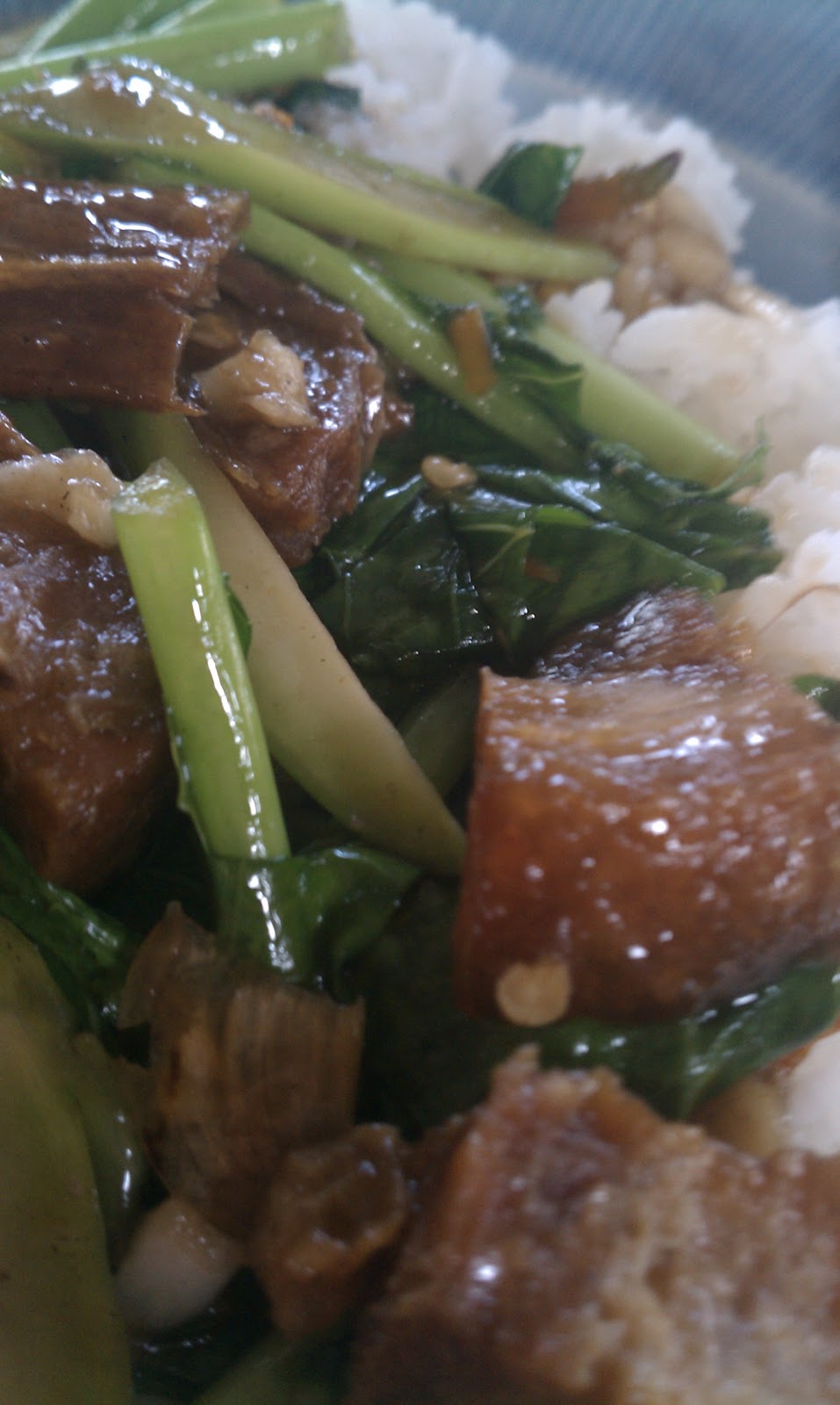
I plan on writing a lot about Burma so in a few weeks there should be a lot of updates. But for now, I'm happy to relax in Bangkok (that seems like a strange thing to say about this city) and eat lots of crispy pork.

-DC


Thursday, March 1, 2012

Everything you need to know about Brunei (sort of)


The first time I heard about Brunei  Darussalam was when my parents bought me a copy of the Guinness Book of World Records, 1999 edition. In the section about wealth, there was a little paragraph and a picture of the Sultan of Brunei, who, for a little while there, was one of the top three richest people in the world.

Now he has dropped a little lower on the list. He only has $20 Billion in the bank, which puts him behind Putin and King Bhumidol of Thailand in the list of richest heads of state, and in front of King Abdullah of Saudi Arabia.

Brunei is a tiny, oil rich country sandwiched into the Malaysian state of Sarawak on the northern coast of Borneo. At one time, the Sultinate was the most powerful force on the island, until the military might of the United Kingdom forced the secession of what are now the Malaysian states of Sarawak and Sabah. Brunei, too, eventually fell under British rule, and didn’t regain full independence until 1984, by which time oil, and the Shell Corporation, had brought a lot of money into the country, making economic independence a viable option.

Most of that money fell into the hands of the royal family, and continues to do so. Brunei functions like a 400,000 person company, everyone working for a benevolent, autocratic boos that treats them pretty well. There is no income tax in Brunei, nor is there any cost for education or medical service. There is also a democratically elected Legislative Council, reformed by the Sultan in 2004, when he also declared himself President and Prime Minister, with full executive authority, infallible under Bruneian law. As Minister of Defense and Finance he is the Supreme Commander of the Royal Brunei Armed Forces, Inspector General of the Royal Brunei Police Force, and holds honorary positions in the British and Indonesian Navies. His wardrobe of decorated military uniforms is plastered on every available public space in Brunei. The Sultan salutes into the distance in Army fatigues, Air Force uniform and Admiralty decoration. He is a truly renaissance man.


He is Brunei. When he dies, his son will become Brunei. His cult of personality is also tied to the state religion – Islam – through the Malay Islamic Monarchy, which makes him first in the line of defense of his people’s faith.  

What he may lack in domination on the world’s list of the richest, the Sultan, (full title: His Majesty Sultan Haji Hassanal Bolkiah Mu'Izzaddin Waddaulah ibni Al-Marhum Sultan Haji Omar 'Ali Saifuddien Sa'adul Khairi Waddien, Sultan and Yang Di-Pertuan of Negara Brunei Darussalam) makes up for with sheer swag and absurdity. His official house, claimed to be the largest operating palace in the world, has 1,888 rooms, with nearly three hundred bathrooms and covers over 2 million square feet. According to Wikipedia, his car collection tops out at 1,932 with 531 Mercedes-Benzes, 367 Ferraris, 362 Bentleys, 185 BMWs, 177 Jaguars, 160 Porsches, 130 Rolls-Royces and 20 Lamborghinis. Once, on a visit to London, he had specially manufactured a Porsche, Rolls hybrid, with the distinctive Porsche backside and intimidating hood of a Rolls.


He has a 100 Million dollar Boeing 747, six small aircraft and two helicopter. A friend of mine, a bus driver in Belgium, was once the driver for Janet Jackson’s crew during a European concert swing. Between stops, they received a call from the Sultan’s staff, and my driver friend was redirected to a private 747 waiting on the airport tarmac. Janet got into the plane, flew halfway around the world, performed privately at the birthday party of the Sultan’s daughter, and was flown back. This man balls hard.

Oh, and he has a Jacuzzi made of pure gold.

I visited Brunei for six hours, saw his face everywhere, and continued on my way. He might be my favorite modern man. 

There are also some really beautiful mosques in Brunei's capital, Bandar Seri Begawan 


I wasn’t so much falling down the hill as I was sliding. A thick sheet of rotten leaves and colorful fungi sailing in front and below me, ushering my clumsy mass down an unbounded path of noisy brown mud. Wooly pillows of moss, inches thick, crawl across the ancient trees all around me as leaves larger than my entire body droop in front, slapping across my face as the uncontrollable tumbling carries me deeper through the forest. Green on all sides. Everything glistens. The air twinkles as the few rays of sun that manage to fight through the canopy shatter their way through the sodden mist. Even the rocks seem soggy, blunted black chunks that look squeezably wet. Sweat refuses to leave my body. It can’t evaporate – there is no room left in the air, so it falls off in sheets, mixing into the forest floor, more wetness. 

It hasn’t rained here in days.

This is Borneo, where the earth exhales. Dark. Green. Always Wet. Life is different along the equator. There is a lot more of it.

I fight to stay upright, streaming through webs and nests whose inhabitants don’t enjoy the disturbance. As I try yanking the sticky skein from my hair, fist size mosquitoes examine my steaming, sputtering presence. Thick, hot, loud life is bombarding from all sides. It is choking me. I am an invader here. I pause in my slide to lash out wildly, throwing my arms through the air to clear some breathing room. But each deep gasp attracts more dangly airborne creatures to my rich carbon emenations, and from below, gummy black leeches materialize out of nowhere to gobble blood from my ankles. I tear them off in a panic and start to run, but after only five steps I find myself tumbling – not along the path but down into it. Face first into the rotting ground. I look up and see the biggest mushroom of my life – orange and glowing and phallic – and a wasp stings me on the shoulder

Welcome to the jungle. 


Tuesday, February 28, 2012

Bario Town


I came to Borneo to get a taste of what I’d heard described as “brutal rain forest”. But getting to the jungle isn’t easy. Thoughts of landing in Borneo and being enveloped by a primary rainforest of hooting gibbons and swinging orangutans are quickly shattered when I land in Kuching, the capital of the Malaysian state of Sarawak. It’s an enormous city, over 600,000 people collected together along a slinky stretch of river – a blend of Chinese, Malay, Indians and indigenous Borneo tribes people (in this region principally the Iban culture, famous for their tattoos and notorious headhunting past).  

It turns out that a lot of people live in Borneo. The third largest island in the world is divided along several political and geographic lines. To the south, the Indonesian state of Kalimantan makes up nearly three quarters of the landmass, while to the north the two Malaysian states of Sarawak and Sabah orient themselves along the coastline’s southwest – northeast axis. Between them, the tiny Sultinate of Brunei clings on to an oil-rich foothold. Modern human activity on this enormous jungle island is mainly squeezed into the narrow corridor between the coast and the mountains. A dark asphalt vein connects people in a bustling web of gas stations and glass cities.

National parks pepper this stretch of human life, isolated pockets of preserved wilderness. Beautiful? Yes. Untamed jungle you come here dreaming to find? No.

To find that virginal rainforest you have to work for it. My destination was Bario, where the road ends – literally, there is no real road to get here. Beyond modern Malaysia’s power grid, the jungle rules. It is almost impossible to drive into the dark heart of Borneo. An signless, senseless weave of muddy logging tracks provides the only ground access to the remote destinations of Sarawak, but even the most experienced drivers get stuck, lost, are forced to turn back.

Traveling here means going over the forest rather than through it.  Rural airstrips are thatched together across the country, where little 15 seater planes drop by once or twice a day, carrying people and essentials.

On a map of Sarawak, Kuching and Bario are about as far as possible from each other. The little dot labeled Bario rubs up against the Indonesian border in an area called the Kelabit Highlands, a forest of dark green pinnacles named for the Kelabit people, who call Bario their cultural center. To get there you have to fly from the oil-boom city Miri, which butts up against Brunei on the eastern side of Sarawak. Staring at the map in my Kuching hotel, I am simultaneously thrilled by the epicness of the next twenty-four hours of travel and already exhausted by the thought.

__________________________________________________________________________________

The first leg is a fourteen-hour drive. I am dreading the bus, which will undoubtedly require a sweatshirt and hat from the industrial AC vents you can’t switch off. So it feels like a sign from god when the dorm room opens and the hotel owner, Chris, sticks his head in.

“Dan, you’re going to Miri today, yes?”

“Yeah, I think so.”

“Have you reserved a bus yet?”

“No. Do I have to do that in advance?”

“These guys are going – you can get a ride with them if you want, just throw them some gas money.”

The guys in question are a group of Special Forces Police who make the trip between Miri and Kuching once a month for training exercises. Malaysia maintains an enormous, combat ready police force prepared to fight back against the army in the case of a military coup. These guys belong to the jungle warfare unit, which, besides being incredibly bad-ass, actively pursues and detains illegal loggers. They are forest protectors.

As I load my bags into the back of the pickup, one of the guys, Tal, gives me an enormous black garbage bag and tells me to put my pack in it. When I ask him why, he smiles and responds, “Because we drive with Four Wheel Drive.”

The trip is brutal. Kidney bruising.  This is the good road in Sarawak, but every two minutes I go bruisingly airborne into my seatbelt as the pickup thunders through another ditch, pothole, unexplainable highway speed bump. Red lights are everywhere, but Nam, the driver, seems oblivious. Maybe it’s because he’s got a police sticker on his windshield, because we’re hitting 120 kph on the surface roads past signs that say AWAS (SLOW), oblivious to the death throes of the shock absorbers.

Tal keeps turning back to look at me from the front passenger seat to ask if I’m sleeping yet. I try to reply but get cut short as the truck bucks into the air again. We all laugh together and he passes around a pack of Dunhills and we roll down all four windows and it feels like a road trip with my buddies, even though these guys are both 40 years old.

Exhausted and unable to sleep. No light to read, no music. I look out the window at a silent lightning storm raging through the night sky and can’t stop thinking about the absurdity of the moment. Roaring through the night in Borneo with a pair of jungle warfare fighters. There is a curved-handled machete under one seat and a pistol under another. And me with a backpack full of books, floating along without touching down, breezing along for a few hours with these guys, probably never to see them again. Unprecedented circumstances, I latch on and breathe deep and try to remember every detail of the now.

We roll into Miri past one in the morning and drop Tal off at his apartment, where a guard with an assault rifle lets us onto the base, and I feel nervous for a moment that maybe he thinks I’m some prisoner handcuffed in the back seat. Five minutes later, Nam is letting me out at my hotel and shaking my hand and he’s gone into the night.

I stand alone on the sidewalk, empty and reeling, trying to download for a second here before having to interact with humans again. I’m staring across the street at nothing in particular when a tiny blue car pulls up in front of me and the window rolls down. A big, square face with short hair and crinkly eyes sticks out and blurts something I can’t understand.

“Sorry,” I ask, cupping my hand to my ear.

“Are you gay?”

His voice is so unswerving and inflectionless that the words don’t register. Before my brain can absorb the question some deeper linguistic area of my spine that can somehow understand words without context shoots back a punctual “No,” steady and clear as the question.

“Ok,” he smiles as though he had asked me the time of day, rolls up his window and keeps driving. The whole interaction lasted maybe five seconds. Hundreds of questions run through my brain but I ignore them all. My laughter echoes through the empty street for a minute, then I walk into the hotel and crash.


__________________________________________________________________________________


I only spend six hours in Miri. I’m up at seven and in a cab to the airport, where I make a beeline for the air desk and snag the last seat on the 10:30 flight to Bario. I’ve never bought a plane ticket like this, day-of, in the airport. It makes me feel light and fleeting and unpredictable. Catch me if you can.

It’s the most beautiful plane ride I’ve ever taken. There’s no way to seal the plane door, light and air stream through the cracks in the unpressurizeable metal tube. We stay below the clouds and I look out the window over a sea of green. We’re close enough that I can make out the trees individually, but these discrete patches quickly fade into an analog of green that makes me question the effectiveness of the words we use for color. Pea, jade, peridot, olive, emerald, lime, sea green, dark green, light green, grassy green, leafy green; they are all here. They capture the tiniest fraction of what stretches below.


The view from the plane

The majority of Bario's residents are still subsistence farmers


Rice is the chief crop of the Kelabit Highlands


The airport at Bario is a rickety wooden building. The air control tower is the second floor. A plane shows up twice each morning, and visitors walk twenty minutes down a dirt road into town. On the runway, tiny uniformed women unload the plane and hand goods directly to villagers waiting to the side. Huge boxes of bottled water, spare parts for cars and bikes, wholesale vacuum-sealed bags of snacks and cigarettes are hauled onto once white pickup trucks decorated with concrete encasements of mud. These deliverymen lurch down the road towards town. I throw my bag in the back of one of the pickups, the guy driving says he knows a good place to stay.
Central Bario

The jungle is never far away

At 3500 feet, the highlands provide a respite from the 90 degree steam on the rest of the island. It’s calm and cool in Bario, the largest highland village, a rice bowl rounded by 7000 foot high spikes. An impregnable land of mist and jungle, stitched together by logging roads and willpower. The Kelabit people, one of the smallest ethic groups in Malaysia, are scattered across the plateau, a smattering of stilted longhouses where families live side by side in subdivided sections under a single roof, sharing a common living space stretching down the length of the building.

Less than a thousand people carve out a quiet living here. Occasionally a motorbike or jeep will putter up the road, but aside from that the only noise is the wind rustling through the fields. Serene and slow, time ticks by on a different pace here. One day when walking between villages, a man pulled up in a truck to offer a ride. In the passenger seat, his friend was holding a saturated rag to his bleeding index finger. It was dangling by a thread of skin after an accident while working on a boat propeller. The driver said there was plenty of room, that they were going to the hospital in Bario and had room for more, especially in this heat. At his injured friend’s insistence he continued down the road, grinding slowly across the stones at 20 mph – a languid emergency.


Tom Harrison, an Australian anthropologist and WWII militaryman, successfully parachuted into Bario and lived their for two years after the war. He later described the location,

…a far upland plain which can only be reached by foot, … There are just one or two places on the map of Borneo – and, more widely, on a map of the world – where you can get farther away from a known place fro what most people call “the world.” There are fewer places where you (or I) are likely to feel more remote, more “cut off” from the great outside…


The description still holds. You can’t escape this atmosphere. The village envelops its visitors. The only accommodation comes through homestays, where for a flat price you get a bed to sleep in, three square meals, family banter over the dinner table and a local social network happy to let you in. And they are Happy. Discontent seems impossible here, at least on first glance. A small community of uncles and grandparents and third cousins where every door leads to another relative. For generations, it was not only normal but necessary to marry within the family. “The longhouse…that’s why we’re all related,” one woman explained to me. “Once you get to the third cousin, it is OK, but first cousins cannot marry.” There is no alternative when you live in an isolated mountain community.

The surrounding mountains reach up to 7000 feet


The home I stay in is big. The brother, Apoi (Christian name Scott) is in charge. Along with his four sisters, he manages the lodging – cleaning and cooking and maintaining the sheep farm down the road. He also teaches at the local school and is involved in every level of local politics. It’s an inherited level of responsibility. Among the other residents of the house is a modicum of fluctuating nephews, nieces, and grandkids who practice their English alphabet in the kitchen, while Auntie, Mom and Dad (who apparently have no other names), hang out by the fireplace all day.

On the second day of my stay I learn that Dad was once the chief of the entire Kelabit region. “Before, if you were a leader from Miri or anywhere else and you came here, you came to see my father,” sister Nancy explains. Now Dad is stooped and silent and grey. A collection of long hoary strands trail off his neck mole, and he spends his days basking in his accumulated family prestige, leafing through old magazines or noisily sorting through a selection of aluminum coated medicine packets. When the family stands in a circle with heads bent, to say grace over every meal, he sits in the corner with his dated periodicals, eyes open. But if anyone deserves this kind of swag it’s Dad; it’s because of his efforts that there’s an asphalt airstrip in Bario.

It’s the airstrip that connects Bario to the outside world. The airstrip brought a sense of modern life. Until four years ago there weren’t any phone lines in town. There still isn’t electricity; at night generators spring to life behind each house. Dad changed this town. Now people can come and go on a $30 whim. Now kids grow up thinking about what they are going to do when they get out of this town, when they get to Kuala Lumpur or Miri or Kuching.

Bario was the sight of an evangelical Christian revival in the 70s, and the town maintains a deeply religious ambience. Stores shut down on Sunday as everyone files into the hulking blue church on the edge of town. This old-timey-ness and communal quaintness is one of the reasons Malaysian people like to visit Bario, to get a sense of a world apart from the wealthy, modernized Islamic society.

The view from prayer mountain

It’s also what keeps Bario alive. With access to the outside world, the Kelabit people are dwindling out of the highlands. “Everyone is mixed now,” an old uncle observed at dinner one night. “They marry Chinese or English or even the Negro now…very seldom do Kelabit marry Kelabit anymore.” Kelabit children grow up, they leave for the city, and the older generation stays put. If it weren’t for the church this town would disappear. Every holiday season, on Easter, Christmas, big birthdays, the children all find their way back to Bario. “It’s good, or else the parents would have to follow to Miri or Kuching because they can’t live alone.”

Bario is changing. There are plans to build a modern hotel in the future. And a modern highway has already been started. Although the road could take up to ten years to finish, they’d only have to extend the runway to start the packaged droves streaming in and out. The fear is that while it will provide a huge economic boost to a tiny town, it will drive the farmers, who hang on through a slow trickle of rice sales bolstered by occasional homestay payments, out of business. Bario is still a community of subsistence farmers, a lucid glimpse into the past. A hotel will change all that. It will become a tourist town.

Family dinners here are enormous. With twenty heads to feed, tables groan under the weight of the food. Wild boar and carp and fern sautéed in garlic. Ginger shoot salad and sweet bee larvae and huge tubs of rice. On my last night I peer down the table at Dad, who sits chomping silently, concentrating on picking the bones out of his fish. I haven’t heard him speak one word in the four days I’ve been here. Without him I would have never made it. 

Borneo is sometimes called The Land of Hornbills, this guy was sunbathing on a neighbor's porch